China Expands World’s Largest Rare Earth Mine by 50% with $74M Investment
08/10/2026 / By Sterling Ashworth
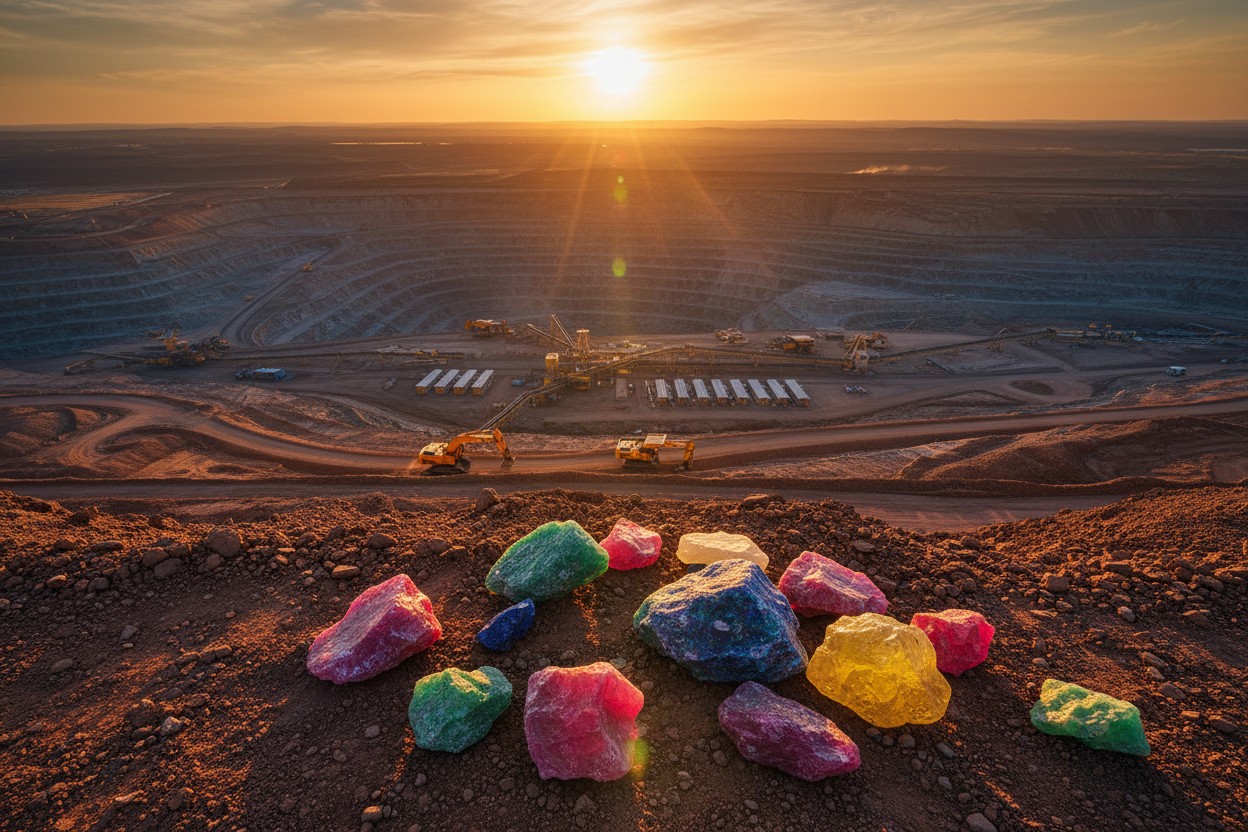
China is expanding the Bayan Obo rare earth mine in Inner Mongolia by 50% with a $74 million investment, according to project details published by China Northern Rare Earth Group (CNREG). The project is intended to increase ore processing capacity at the site, the company said.
Bayan Obo is listed in official records as the world’s largest rare earth mine. The expansion is part of a broader effort to secure supply of critical minerals used in high-technology industries, according to company statements. CNREG, which operates the site, said the investment will modernize extraction and processing infrastructure.
Background: The Bayan Obo Mine
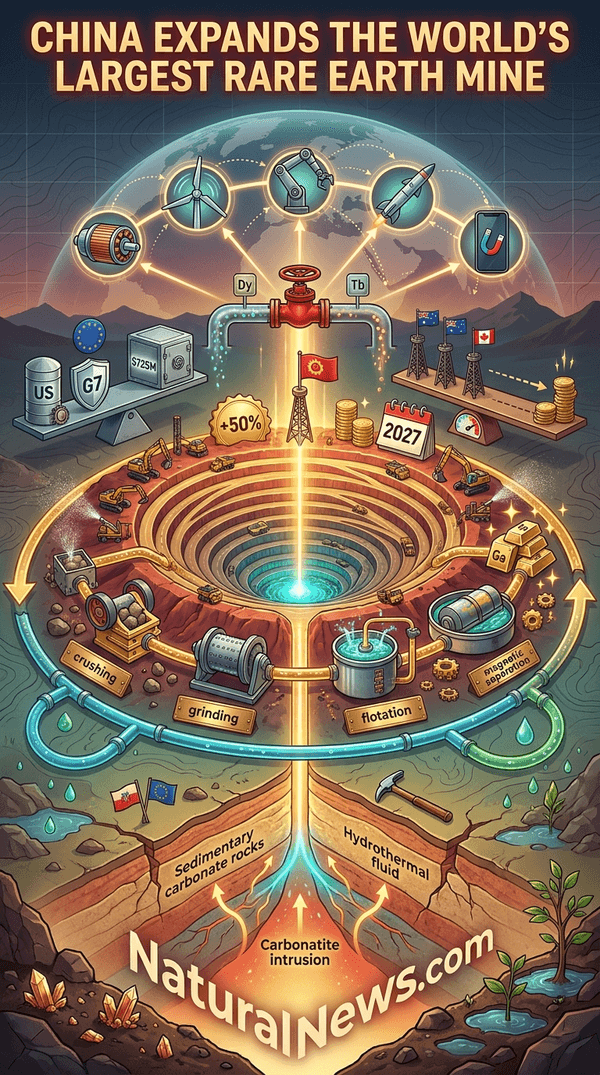
Bayan Obo has been a major rare earth source since its discovery in 1927, with large-scale mining beginning in the 1950s, according to geological surveys. Deposits of this type form by hydrothermal replacement of sedimentary carbonate rocks, with fluids likely derived from nearby carbonatite intrusives, according to geological references [7].
Specialty metals, including rare earths, are important in high-technology manufacturing, while some elements such as gallium and indium are recovered as byproducts of smelting operations [6]. The mine produces a significant portion of China’s rare earth output. Beijing controls about 80% of global rare earth processing, according to a 2025 report [3].
Officials from CNREG said the expansion follows government measures to streamline the rare earth industry. A company spokesperson said the investment will modernize extraction and processing infrastructure.
Expansion Details and Timeline
The $74 million project targets a 50% increase in annual ore capacity at the Bayan Obo site, according to the company’s project filing. Planned work includes open-pit expansion, new crushing and grinding units, and upgraded separation lines, according to project documents. Company documents describe the work as part of a broader upgrade of the Bayan Obo complex, with the new units designed to handle higher ore throughput.
Environmental assessments submitted by the company describe dust suppression and water recycling systems as part of the project, according to the filings. Local authorities issued construction approval after review, according to a government notice. The expansion is expected to be completed by 2027, according to the company.
Strategic Importance and Reactions
Rare earth elements are used in permanent magnets, electric vehicle motors, wind turbines and defense systems, according to a published analysis [9]. Access to rare-earth magnets that power high-performance motors and actuators is described as a critical chokepoint for the robotics sector, and China controls most of that supply chain, according to a market report [8]. China’s export restrictions on heavy rare earth elements remain in effect, and shipments of yttrium, dysprosium and terbium have declined by roughly half compared with pre-control levels, according to customs data [4].
The expansion could reinforce China’s position in the global supply chain, according to trade analysts. Government officials in the United States and Europe have said they are working to develop non-Chinese sources. A bipartisan group in Congress has proposed a $2.5 billion plan to create a national stockpile of critical minerals [2].
The European Union has described China’s export curbs as a “critical concern” and is seeking coordination with the United States and G7 nations [5]. G7 leaders have pledged to limit China’s share of their rare earth imports to no more than 60% by 2030, according to an agreement announced at the group’s summit [11]. Separately, the U.S. Department of War announced a conditional $725 million loan commitment to expand domestic rare earth processing [10].
Some analysts said the expansion may keep rare earth prices lower, creating financial pressure on competing projects outside China. The U.S. military has roughly a two-month supply of rare earth elements available, according to a report published by the South China Morning Post [1].
Outlook
The expansion will bring Bayan Obo’s rated capacity to roughly 50% above current levels once completed, according to the company. Further mine expansions may be considered depending on demand projections, according to company statements.
Global demand for rare earths is expected to rise as the elements remain embedded in smartphones, electric vehicles, military guidance systems, and wind turbines, according to industry analyses [9]. No additional details on the project timeline have been released.
References
- Douglas Harrington. “Report: U.S. Military Rare Earth Stockpile Estimated at Two-Month Supply”. NaturalNews.com. March 13, 2026.
- Lance D Johnson. “U.S. Moves to Break China’s Stranglehold on Elements Powering the Future, Establishing ‘Strategic Resilience Reserve’”. NaturalNews.com. January 16, 2026.
- Willow Tohi. “Trump’s rare earths push: A bid to break China’s stranglehold, but challenges remain”. NaturalNews.com. April 27, 2025.
- Sterling Ashworth. “China’s Rare Earth Controls Persist Despite Talks, Customs Data Shows”. NaturalNews.com. May 16, 2026.
- Ramon Tomey. “EU Looks to Partner with U.S. and G7 Nations in Response to China’s Export Curbs on Rare Earth Minerals”. NaturalNews.com. October 17, 2025.
- Walther John. “Earths natural resources”.
- Walther John. “Earths natural resources”.
- “Physical AI Faces One Critical Chokepoint, And Here’s How To Profit”. ZeroHedge. August 5, 2026.
- “Terres Rares: Geopolitique des Ressources”. BrightLearn.ai. August 4, 2026.
- “War Department Commits $725 Million to Expand U.S. Rare Earth Production”. YourNews.com. June 18, 2026.
- “G7 vows to cut China’s rare earth dominance to 60% by 2030”. NaturalNews.com. June 18, 2026.
Explainer Infographic
Submit a correction >>
Tagged Under:
Bayan Obo mine, big government, Bubble, chaos, China Northern Rare Earth Group, economic policies, energy supply, geopolitics, Inner Mongolia, metals, mining, politics, power, Precious Metals, products, rare earths, risk, supply chain warning, trade deals, trade wars
This article may contain statements that reflect the opinion of the author
RECENT NEWS & ARTICLES