Morgan Stanley Warns Oracle Data Center Delays Could Delay Revenue, Pressure Debt
10/12/2026 / By Edison Reed
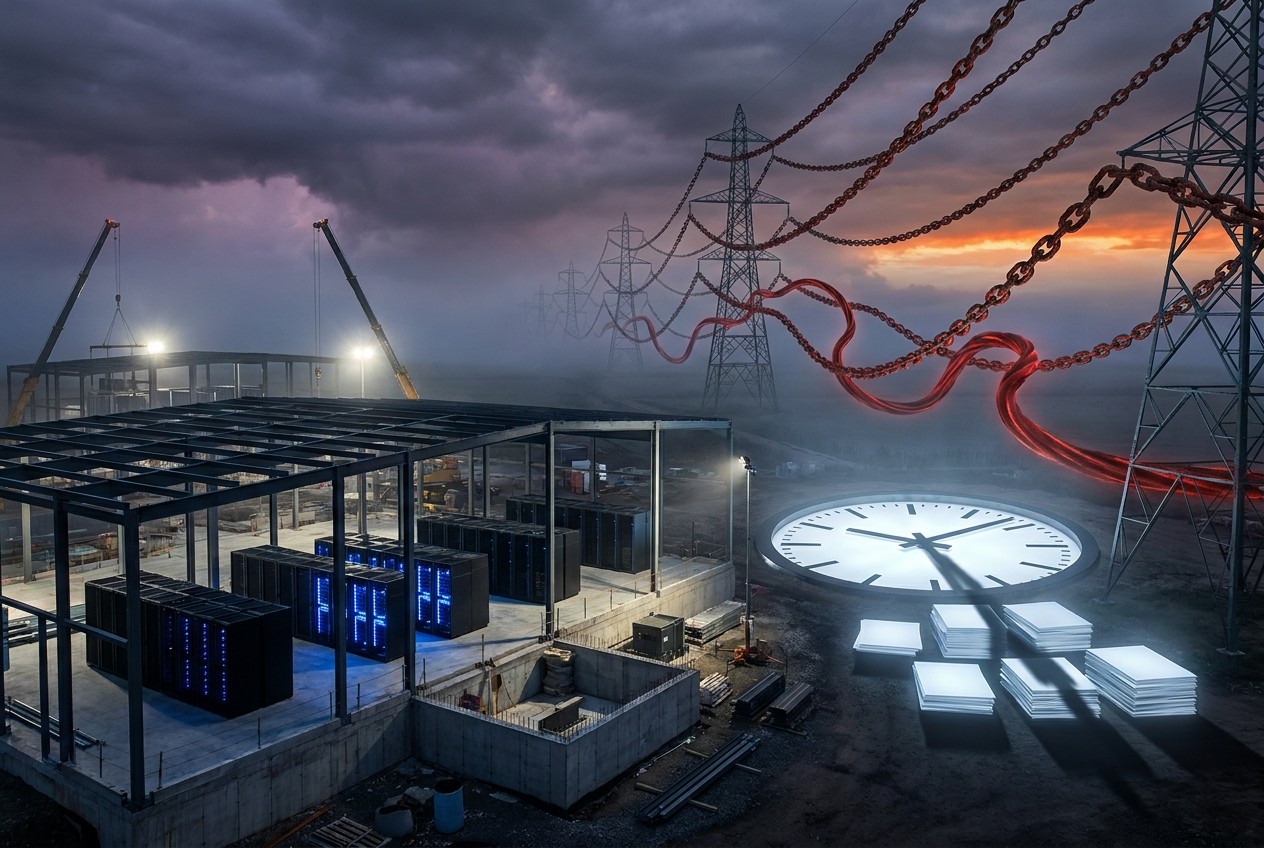
Morgan Stanley credit analysts Lindsay Tyler and Benjamin Guerrero said in a note titled “ORCL Credit: Lighthouse in the Fog” that delays to Oracle data center projects could defer revenue and cash flow, according to a report on the analysis [1]. The note follows reports that Oracle’s Project Lighthouse campus in Port Washington, Wisconsin, may face power-related delays, the report stated [1].
That level implies a more than 20% probability of default over the next five years for a company rated investment grade, the report said [1].
The analysts’ warning adds to a broader debate over whether delays to AI data center construction relieve pressure on corporate balance sheets or simply defer it. According to the report, the bank rejected the argument that late buildings mean late capital expenditure and therefore less near-term strain [1].
Wisconsin Project Faces Power Approval Delay
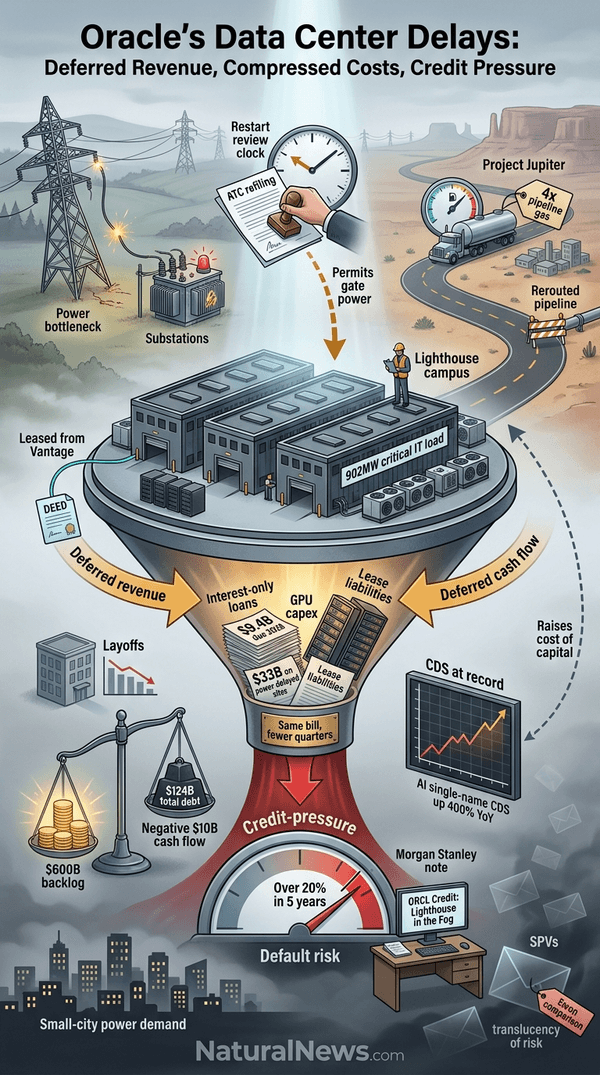
The Lighthouse campus is one of two Vantage campuses built for Oracle to lease, with four buildings and about 902MW of critical IT load, contracted in September 2025, according to the report [1].
The PSC revoked its completeness finding on ATC’s application in August, closed the case, and ATC refiled on a new docket, restarting the review clock, according to the report [1].
Power, not construction, is the bottleneck at both Lighthouse and a New Mexico site known as Project Jupiter, the report said [1]. At Jupiter, the analysis said Oracle is weighing hauling compressed natural gas to the campus by road until a rerouted pipeline arrives, at roughly four times the price of pipeline gas [1].
Analyst Says Delay Defers Revenue and Cash Flow
The report said Oracle has more than $600 billion of future revenue tied to AI data center construction, describing that backlog as the core of the investment case [1].
Tyler listed four reasons the delay matters, according to the report: revenue and cash-flow realization would be deferred; balance-sheet and cash-flow impact could become more lumpy; visibility into lease, financing, and remaining performance obligation terms is limited; and execution risk could affect customer prepayments [1]. The report said it remains unclear whether customers have specified compute delivery timelines or what remedies may apply for delays [1].
The analysts wrote that if multiple halls are construction-ready by the time power is secured, Oracle could face more concentrated GPU capital expenditure and lease liabilities [1]. Prepayments from customers are described in the report as an important potential future funding source for the company [1].
Capex Relief Argument Disputed
Barclays said after Project Jupiter’s force majeure that roughly $30 billion of hardware capex is typically spent two to three months ahead of an asset going live, and called the force majeure credit-neutral, according to the report [1]. Oracle CDS widened to a record the day after that assessment, the report noted [1].
Morgan Stanley said the delay does not shrink the bill but compresses it into fewer quarters [1].
The report also noted that Oracle borrowed roughly $43 billion in fiscal 2026, ended May 31, and expects to raise another $40 billion of debt and equity in the current fiscal year, according to its filings [1]. Independent coverage of Oracle’s leverage has pointed to $124 billion in total debt, negative $10 billion cash flow, and thousands of layoffs as the company directs resources toward AI infrastructure [2].
Refinancing Concerns Include Completed Abilene Site
The report said Abilene, the flagship Stargate site in Texas, has six of eight buildings delivered but $9.4 billion of construction loans that are interest-only and due in 2028 [1]. It said $33 billion of construction debt, about 40% of the total tracked, sits on two sites where power delays have been flagged [1].
Goldman Sachs’s credit desk said AI single-name CDS volumes are up 400% year over year, with Oracle at the top of the list, according to the report [1].
Separately, analysts and watchdogs have pointed to the wider use of special-purpose vehicles across Big Tech, comparing the structures in legal form to entities used by Enron before its collapse while noting that current accounting rules require fuller disclosures [3]. Those arrangements add another layer of Oracle-linked paper competing for the same credit buyers, the report said [1].
Oracle Denied Delays; Next Tests Ahead
Oracle denied a December Bloomberg report that some Oracle data centers for OpenAI were being pushed to 2028 from 2027, and its stock rebounded, according to the report [1]. Morgan Stanley said its negative view pre-existed the project delays and is based on fundamentals [1].
The next tests cited in the report are the Wisconsin Public Service Commission’s completeness ruling on ATC’s refiling, due October 19, and Oracle’s fiscal second-quarter results in December [1].
References
- “Delayed Revenue, Delayed Cash Flow”: Morgan Stanley Warns Oracle Data Center Delays Could Crush Its Debt. https://www.zerohedge.com/markets/delayed-revenue-delayed-cash-flow-morgan-stanley-warns-oracle-data-center-delays-could
- Oracles ruthless AI gamble Mass layoffs amid data breaches and mounting debt – NaturalNews.com, April 02, 2026.
- Big Tech’s $1.65 Trillion in Off-Balance-Sheet AI Debt: A Closer Look at the Hidden Leverage. https://www.naturalnews.com/2026-07-27-big-tech-off-balance-sheet-ai-debt.html
Explainer Infographic
Submit a correction >>
Tagged Under:
AI, Big Tech, Bubble, Collapse, computing, data center, debt bomb, debt collapse, energy source, future tech, information technology, market crash, money supply, Morgan Stanley, OpenAI, Oracle, Project Jupiter, risk, robotics, robots, Stargate Project, tech giants, technocrats
This article may contain statements that reflect the opinion of the author
RECENT NEWS & ARTICLES